Material Conditioning

Main Menu
A bulk bag conditioner breaks up material that has set hard inside a bulk bag so it will discharge and convey again. When an FIBC comes out of storage or off a long sea freight run as a solid block, plants tend to reach for mallets, a forklift squeeze or a few laps of rolling the bag across the floor. That costs production time, gives uneven results and puts operators in the way of forceful exertion and struck-by injuries.
Floveyor’s bulk bag conditioner applies 4,500 kg (about 9,920 lb) of crushing force in a three-minute cycle, with manual or fully automated control. It is part of our material conditioning range and sits alongside our bag unloading, lump breaking and conveying equipment, so the path from bag to process can be engineered as one line.

What is a bulk bag conditioner?
A bulk bag conditioner is a press that breaks up material that has caked or set hard inside a bulk bag (FIBC) during storage or transport. Pressure plates or rams squeeze opposite sides of the bag until the contents loosen and can flow through the discharge spout again. Floveyor’s conditioner applies 4,500 kg of crushing force in a three-minute cycle.
You need one when material has consolidated past the point a discharger’s flow aids can handle. Massage paddles and vibrators keep cohesive powders moving, but a bag that has set into a single mass needs heavier force applied up its full height before it goes onto the discharger. These are also referred to as bulk bag massagers, bulk bag breakers or FIBC conditioners.
Why material sets hard in bulk bags
Caking is the bonding of individual particles into a coherent mass over time. A bag that has set hard needs to be broken up before it can be emptied. Inside a bulk bag, four conditions usually work together to increase caking:

Moisture
Hygroscopic powders such as fertilisers, salts and sugars draw water from the air. Material that dissolves at the contact points between particles recrystallises as it dries, leaving solid bridges between grains.

Temperature cycling
Day–night swings in a warehouse, or heat cycles inside a shipping container, drive repeated moisture uptake and release. Each cycle can strengthen the bridges already formed.

Pressure
Stacking consolidates the material in the lower bags and pushes particles into closer contact.

Time
The longer a bag sits, the more bonds form. Product that flowed freely at filling can arrive weeks later as a block.
How the Floveyor bulk bag conditioner works

Load the bag
The filled bag is placed in the conditioner by forklift or hoist.

Close the guarding
The operator closes the guarding and stands clear before the cycle can start.

Run the cycle
Pressure plates close on opposite sides of the bag and apply up to 4,500 kg (about 9,920 lb) of crushing force. A standard cycle takes about three minutes; harder material may need further passes.

Release and transfer
The plates retract, the guarding opens and the conditioned bag moves to the discharger for bulk bag unloading.
The conditioner is available with manual or fully automated control. Manual control suits sites that condition the occasional hard bag. Fully automated control suits higher bag volumes, where a repeatable cycle for each material matters more.
Specifications and options
| Specification | Floveyor Bulk Bag Conditioner |
|---|---|
| Crushing force | 4,500 kg (about 9,920 lb) |
| Conditioning cycle | Typically about three minutes per cycle (varies with material, how hard it has set, and number of passes required) |
| Control | Manual or fully automated |
Talk to one of our powder handling specialists about the material challenges you experience and get expert advice on how to optimise your process.
Materials and industries that commonly need conditioning
Caking is most common in hygroscopic, fine or heat-sensitive materials, especially those stored for weeks or shipped long distances.
If your material isn’t listed, send us its details and we’ll tell you how it is likely to behave.
Operator safety, bag integrity and dust control
Operator safety
Conditioning inside a guarded enclosure keeps the operator away from the bag while force is applied and removes the need for manual striking.
Bag integrity
The bag fabric has to withstand the forces the conditioner applies, as well as the weight of the material inside. FIBCs are rated by safe working load (SWL) and safety factor under ISO 21898: 5:1 for single-trip bags and 6:1 for multi-trip bags.
Dust control
Conditioning and discharge points can both release dust. NFPA 660 now consolidates the earlier combustible dust standards, including NFPA 61, 484, 652, 654, 655 and 664, and keeps the requirement for a dust hazard analysis (DHA).
Guarding: confirm how operators are kept clear during the cycle.
Bag rating: confirm SWL and safety factor with your bag supplier.
Dust hazard analysis: if your material is combustible, check what your DHA requires at the conditioning and discharge points.
Bulk bag conditioner FAQs
A typical cycle on Floveyor’s bulk bag conditioner takes about three minutes. Material that has set very hard may need extra passes, so total time depends on the material and how long the bag has been stored.
Conditioning puts force into the bag fabric as well as the material. Check the bag’s safe working load and safety factor with your supplier, especially for multi-trip bags, before setting cycle force and passes.
After conditioning, the bag is lifted onto a Floveyor bulk bag discharger or bulk bag unloader screw feeder for emptying. We can lay out both so the bag travels a short distance between them.
Often, yes. A conditioned bag can still release lumps larger than your conveyor accepts. An AMC handles particles of 6–12 mm depending on tube size, and Floveyor’s rotary lump breaker takes lumps up to 200 mm.
That depends on your site’s dust hazard analysis and hazardous area zoning under NFPA 660 or ATEX. Share both with us early so the equipment can be specified to suit.
Yes. Send us a sample or a material data sheet, and our engineers will assess how it behaves in conditioning and conveying before recommending equipment.
Build your system
Ensure your bulk materials flow freely. Floveyor bulk bag conditioner systems prepare your material for safe, efficient conveying.
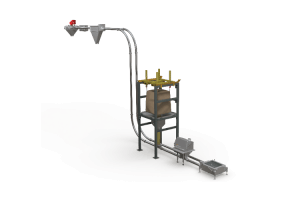
Batch weighing system
Used to accurately weigh and batch materials by weight where precise measurements are critical for product quality and consistency.
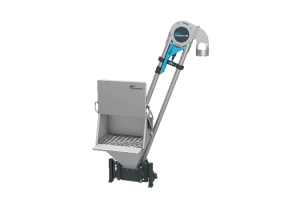
Conveying
A Floveyor system can gently and safely transfer powders and granules – vertically, horizontally, and around bends and corners.
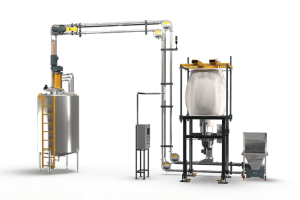
Controls and automation
Controls and automation improve process efficiency and safety by providing parameters for flow rate, batching, temperature etc.
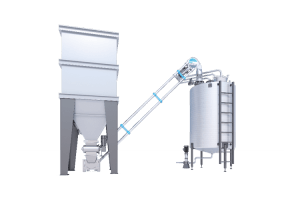
Silo unloading
Customisable for specific industries and projects, our versatile silo unloader is designed to accommodate various silo sizes and layouts.
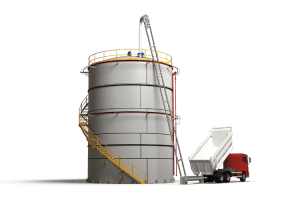
Container truck unloader
A container truck unloading system is used to safely, efficiently and rapidly unload goods via trucks, trains or ships.
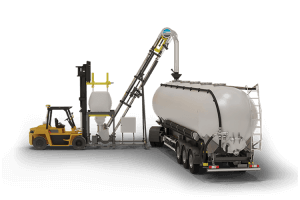
Truck loading
The truck loader is the robust mobile solution for rapid, high-volume decanting for road tankers with a host of add-ons available.
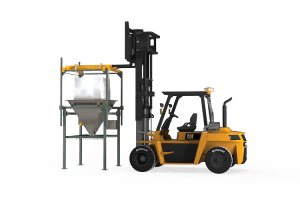
Bulk bag unloading
A bulk bag unloader/discharger offers efficient handling of bulk materials from large bulk bags or flexible intermediate bulk storage (FIBCs).
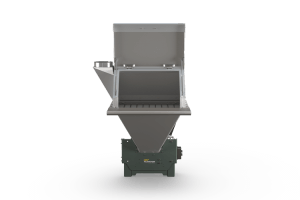
Small bag dump station
A bag dump station is for small bag emptying and is available with optional accessories for specific material application.
Why Floveyor
- Heavy-duty, standards-based design AS/NZS, ISO, EN
- Modular design
- Dust-tight connections
- Safely condition hazardous materials without contamination
- Handles thousands of bulk materials
- Vastly improves flowability
- Seamlessly integrates with Floveyor AMC
- Supports manual bag, FIBC, and road vehicle unloading
- Power handling specialists since 1958
- Manufactured in Western Australia
Get your materials flowing
Floveyor bulk bag conditioner solutions ensure your material conditioning is operating at peak efficiency.


 English
 Chinese
 Dutch
 Finnish
 French
 German
 Hindi
 Japanese
 Korean
 Malay
 Polish
 Spanish
 Thai
 Vietnamese